Smallpox Simulator
Created a cinematic case-study film for the Meridian Smallpox Simulator, translating complex global outbreak modeling into an emotionally resonant, accessible narrative.
Outcome
The final case-study film clearly communicated the tool’s capabilities and importance in modeling global response strategies. The project received industry recognition, including an MM+M Award and a Silver at Cannes, underscoring both creative and strategic impact.
Role
Motion Designer / Editor
Type
3D Animation
, Edit
Date
April 2022
Tools
Cinema 4D, Octane, Xparticles, After Effects, Final Cut Pro

Challenge
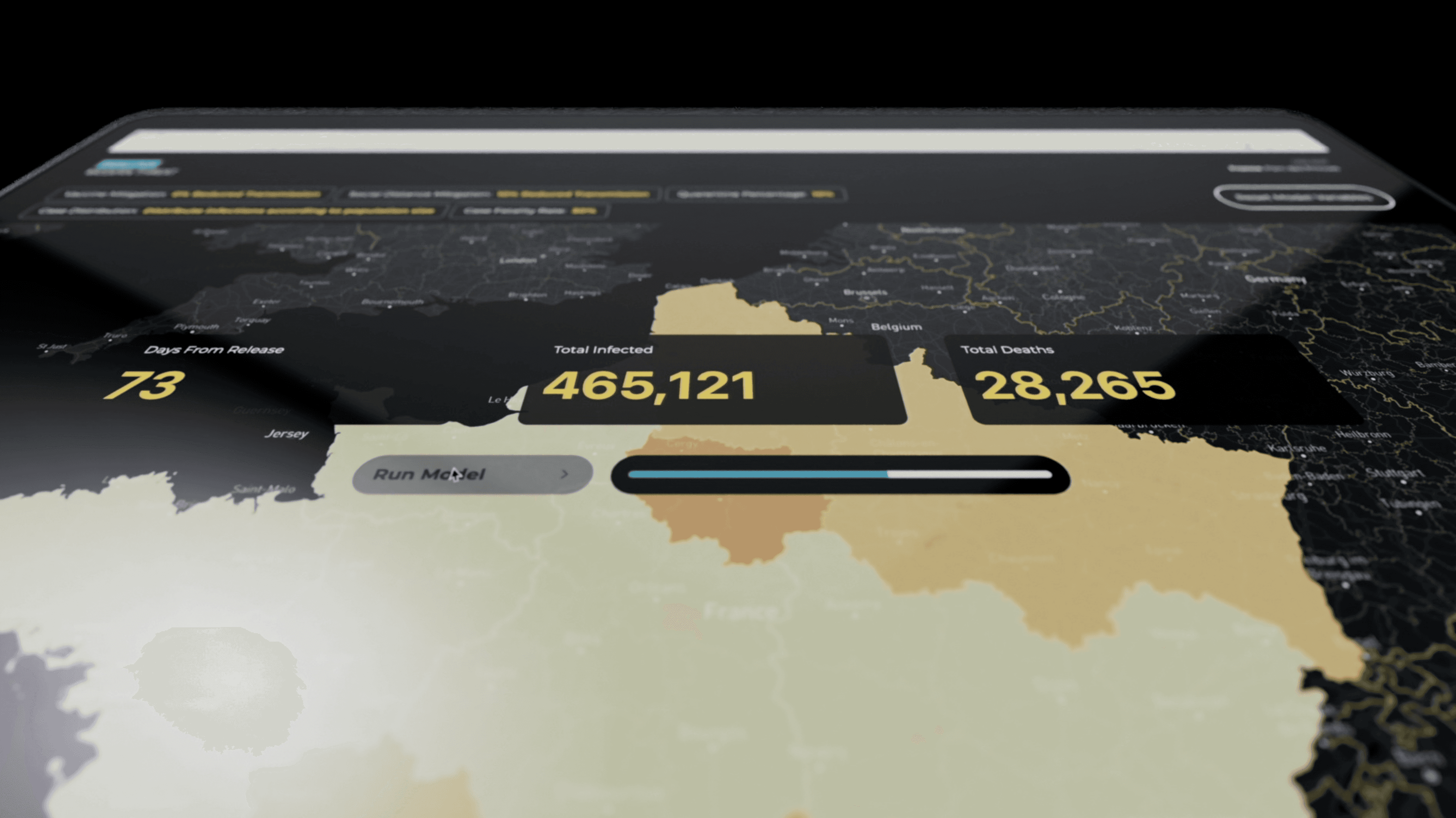
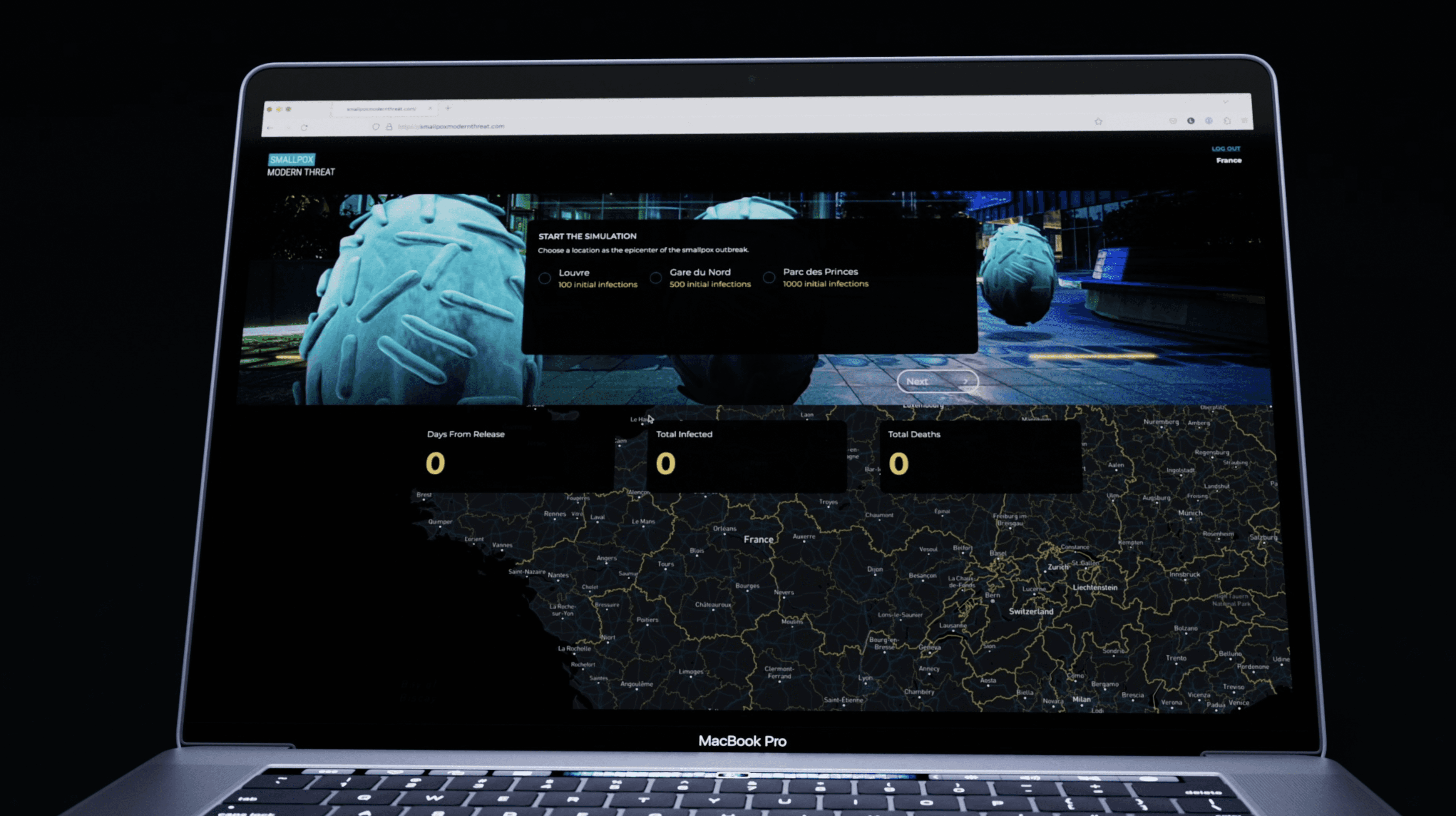
The Meridian Smallpox Simulator is a web-based tool designed to model global response scenarios during a potential smallpox emergency. The platform visualizes how outbreaks could spread and how policy decisions might alter outcomes.
The challenge was to:
Communicate a highly technical modeling system clearly
Convey the potential severity of a global outbreak responsibly
Balance emotional weight with factual accuracy
Translate data and interface interactions into compelling motion
The subject matter required both clarity and restraint.
Role
In collaboration with the team at Wunderman Thompson, I:
Developed 3D particle simulations to represent outbreak spread
Animated interface interactions to demonstrate the tool’s functionality
Structured and edited the narrative arc of the film
Integrated motion elements to communicate scale and urgency

Approach
Rather than presenting the tool as a static demo, we treated the film as a narrative progression moving from localized outbreak scenarios to global scale implications.
The strategy focused on:
Visualizing invisible data through particle-based simulations
Using motion to represent exponential spread
Aligning UI animation with story beats
Creating emotional gravity without sensationalism
The goal was to make the abstract tangible.
Process
Using Cinema 4D, X-Particles, and Octane, I:
Built 3D particle systems to simulate outbreak propagation
Controlled scale and density to visually represent escalation
Animated UI states to demonstrate how the simulator responds to scenario changes
Edited pacing to gradually intensify visual complexity
Careful calibration ensured the visuals remained informative rather than overwhelming.
Reflection
This project demonstrated how motion design can translate complex systems into human-understandable narratives. It reinforced the power of simulation, structure, and pacing when communicating high-stakes, data-driven tools.